Gerard Boekman
Hans Brinker, or The Silver SkatesGerard Boekman, known publicly as Dr. Boekman, is Holland’s most celebrated surgeon and one of its least courteous public figures. His importance to the story lies in the contrast between that fearsome reputation and the kindness and grief disclosed behind it: he comes to the Brinker cottage to try to save Raff Brinker, and his conduct there complicates the judgments formed from his manners alone.
Identity and Public Reputation
Gerard Boekman is introduced through other people’s accounts before the narrative reveals the sorrow that shaped his manner. Peter van Holp calls him a great surgeon, and the landlord of the Golden Eagle goes further, describing him as the greatest in Holland. The landlord’s admiration for his skill does not make him likeable: he complains that Gerard is a bear, recalling that Gerard called him a pig in front of three customers. The story thus establishes a sharp separation between professional authority and social courtesy. Gerard’s reputation is not merely a rumor about an unpleasant stranger; it rests on conduct that has genuinely offended people.
When Peter van Holp and Jacob Poot try to find Gerard, they learn that he has been seen in Haarlem that morning. A report that he might be in Leiden is dismissed by the Golden Eagle’s landlord, who says that Gerard always lodges there when in town and that patients would already be crowding the door. Even this brief search gives his reputation a practical dimension: his skill draws people to him, while his temperament gives them reason to complain about the man they seek.
The Brinker Cottage and the Operation
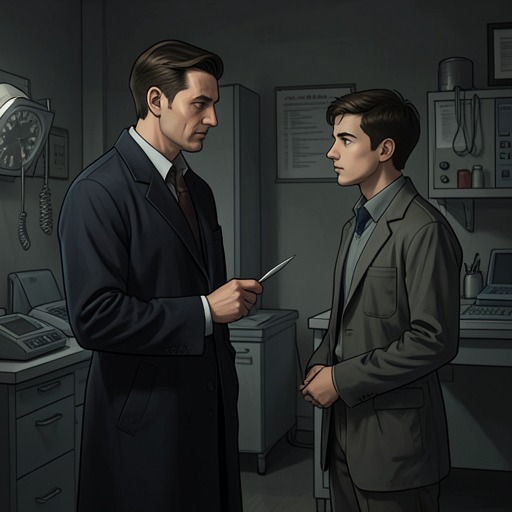
Four days after the family’s ordeal, Raff Brinker remains in bed, pale and unaware of what is happening around him, though his fever has gone. Gerard is now in the bare, clean cottage room, speaking quietly with Vollenhoven, his student and assistant. Hans Brinker waits respectfully near the window. The contrast between the learned surgeon’s discussion and the family’s stillness places medical judgment beside the intimate stakes of the case: Raff is not an abstract patient but the father on whom the family’s hopes depend.
Gerard initially addresses Vollenhoven in a mixture of Latin and Dutch, then restates his explanation in simpler language when the assistant looks blank. After correcting his course in conversation, he tells Hans what he believes must be done to save Raff. Gerard is deeply uncomfortable discussing surgical matters with women; he says that he cannot know when they might scream or faint, so he explains the case to Hans instead. This prejudice shapes who receives the information, even as the scene shows Gerard taking the family’s emergency seriously. Hans listens, turning red and pale and glancing anxiously toward the bed.
When consent is finally given, Gerard confers briefly with Vollenhoven. The assistant, outwardly deferential, privately delights in having witnessed a tear in the famously formidable old surgeon’s eye. Gerard’s reaction briefly unsettles the mask established by the stories about his growling manner: concern is visible, though he does not make a display of it. Gretel Brinker, trembling as she watches him open a leather case and take out sharp instruments, springs forward. The instruments make the danger of the decision concrete, while Gerard’s quiet preparation marks the moment when reputation gives way to action.
A Sign of Recovery
Later, in the still cottage room, Gretel slips back to her mother’s side without daring to look at anyone. Gerard is listening and watching as the family waits. A small movement on the bed makes everyone start, and he leans forward eagerly. Raff’s large hands twitch; one rises steadily to his forehead and feels the bandage with a questioning rather than restless movement. Gerard holds his breath. The response is slight, not a full recovery, but its quality matters: the movement suggests awareness, and the surgeon recognizes its significance. The scene gives his skill a human measure—not a boast about mastery, but concentrated attention to a fragile change in the patient.
Grief and Reassessment
Gerard’s harsh manner receives its deeper context when Peter’s mother tells him and Hans that the surgeon has a kind heart. She explains that many years earlier he lost his only child under painful circumstances. The boy, she recalls, was fine but somewhat hasty and high-spirited; before the loss, Gerard had been one of the most agreeable gentlemen she knew. Her account connects the public change in his character to bereavement, while stopping short of presenting grief as an excuse for every insult. Peter remains only half convinced. He objects to allowing sorrow to turn all one’s honey into gall, preserving the tension between understanding the source of Gerard’s severity and judging its effects.
The story’s portrait therefore depends on a revision of first impressions rather than a simple reversal. Gerard’s surgical greatness is visible in the urgency and attention he brings to Raff’s case; his discomfort with women and his insults remain part of the record. The revelation of his loss makes the earlier stories about his temper newly legible, but does not make them disappear. His brief tear and his held breath disclose feeling through small gestures, allowing the private grief behind the formidable public manner to emerge without turning him into a different man.